
For a new hotel, a famous location helps less than you might expect. Millions of people search for the Grand Canyon. Very few of them search for a hotel they have never heard of.
Trailborn Grand Canyon opened in Williams, Arizona, in late 2024, about an hour’s drive from the South Rim. The location was strong. The search visibility was not. The National Park Service, OTAs such as Expedia and Booking.com, and established names like Grand Canyon Railway already held most of the searches travelers use to plan a Grand Canyon trip.
The campaign began in June 2025. Rather than compete only for hotel searches, three&six built a strategy that put Trailborn in front of travelers while they were still planning the drive.
Between June 2025 and May 2026, organic sessions grew 317%, purchases grew 96%, and organic revenue grew 125%.
Most of the new traffic came from people who were not yet looking for a hotel. Revenue more than doubled alongside it, which suggests a share of those travelers went on to book direct.
The Challenge: A New Hotel Next to a Famous Destination
Trailborn had a newly launched website with little authority, limited brand awareness, and no history in search.
The competition for its most valuable searches was heavy:
- OTAs, including Expedia and Booking.com, ranking for Grand Canyon hotel searches.
- Grand Canyon Railway, a well-known regional brand.
- National Park Service pages leading many of the informational searches around the canyon.
Competing head-on for “grand canyon hotels” alone would have meant a long wait for a new site to catch up. We needed other ways for travelers to find the hotel.
Starting With the Foundation
The first six months, June to December 2025, focused on the site itself.
A full technical overhaul resolved hundreds of issues affecting crawlability and indexing. Site architecture and internal linking were rebuilt so search engines and visitors could move more easily between pages.
At the same time, every major commercial landing page, including the homepage and rooms pages, was rewritten and optimized for the hotel searches closest to a booking.
That gave the content that followed somewhere useful to send travelers.
Reaching Travelers Earlier in the Trip
Most hotel SEO focuses on travelers who have already chosen a destination. For a property in Williams, that leaves out a large group of people: those planning a road trip through the Southwest.
Williams sits on historic Route 66, and many Grand Canyon visitors arrive by car from Las Vegas, Phoenix, or California. Those travelers start by searching for routes, stops, hikes, and things to do. The hotel decision comes later.
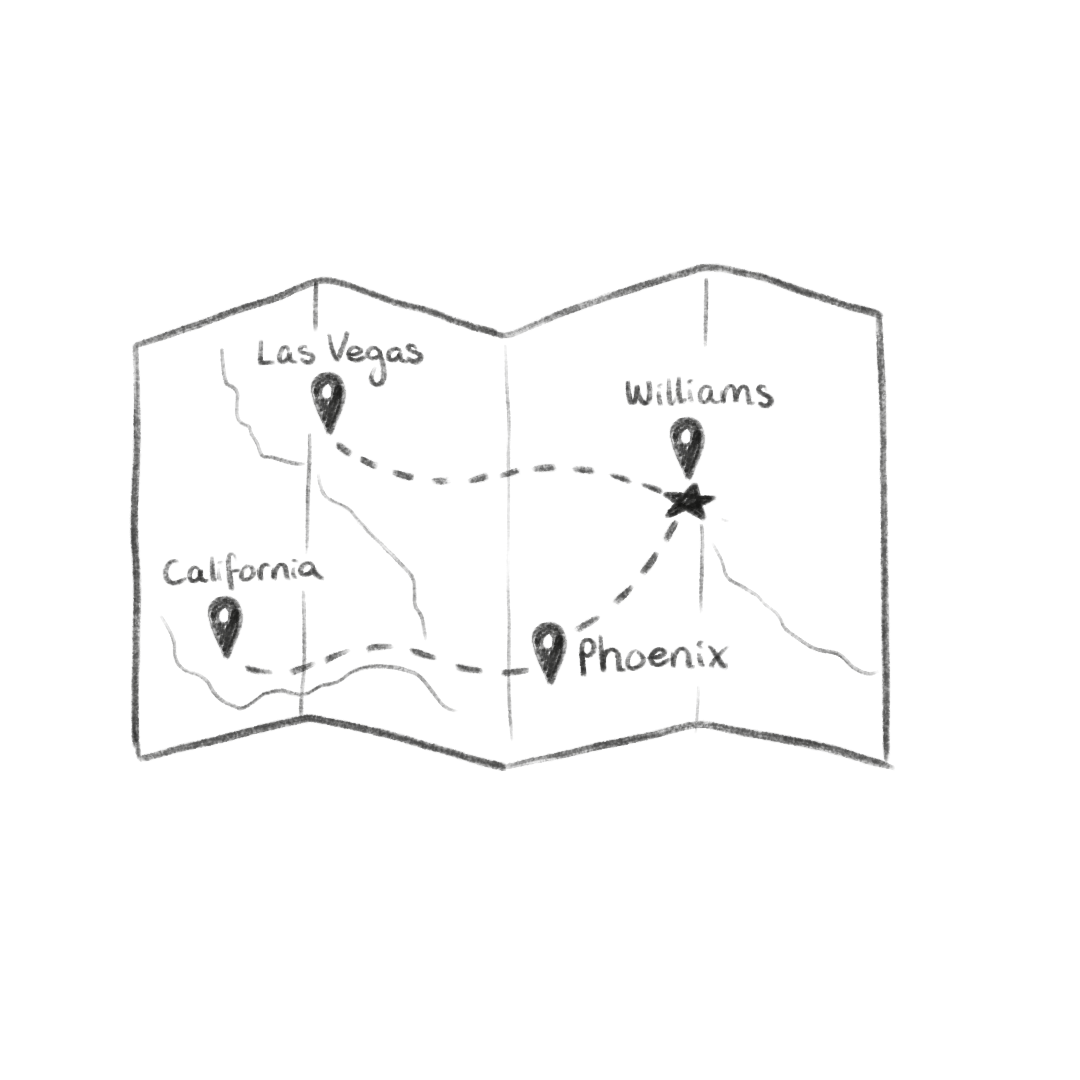
Beginning in January 2026, the content strategy expanded beyond accommodation into those earlier searches. Content covered:
- Route 66 road trips
- Drives to the Grand Canyon from Las Vegas, Phoenix, and California
- Grand Canyon hikes and stargazing
- Things to do and places to eat in Williams
- Seasonal visits, including winter and the Fourth of July
- Local attractions such as Bearizona, Canyon Coaster, and The Polar Express
- Pet-friendly stays and weddings
We also widened the geographic radius of the content, so Trailborn could appear for searches about the wider region and the drive in, beyond the canyon itself.
The aim was for Trailborn to be part of the trip plan before the traveler started comparing hotels.
The Route 66 Guide
The Ultimate Guide to a Perfect Route 66 Road Trip became the strategy’s flagship piece of content.
By June 2026, the guide accounted for:
- An estimated 15.7K monthly organic visits
- 958 ranking keywords
- 222 tracked LLM prompts
- About 55% of the site’s estimated organic traffic
It ranks on page one for some of the highest-volume searches in the category, including “route 66” at position 8, “us 66 road” at position 3, and “route 66 road trip” at position 4. The site did not rank for any of them before.
A guide like this does not sell rooms directly. It introduces a hotel on Route 66 to people planning to drive it, and links them to the pages where they can book.
Growing Hotel Search Visibility
The commercial page work and the wider content strategy also moved Trailborn up for the hotel searches closest to a booking:
- “hotels in williams az” reached position 1
- “grand canyon hotels” went from unranked to position 4
- “hotels near grand canyon” moved from position 17 to 7
- “grand canyon hotel” moved from position 8 to 6
Across the site, ranking keywords grew from 1.1K to 5.2K, and estimated monthly organic traffic grew from 3.8K to 39.2K visits.
Showing Up in AI Search
As more travelers plan trips with AI tools, we also optimized content for AI search visibility.
By the end of the campaign, Trailborn Grand Canyon had:
- 508 AI mentions
- 269 cited pages
- Citations across ChatGPT, Google AI Overviews, AI Mode, and Gemini
Content written to answer specific trip-planning questions, such as how to drive from Phoenix to the Grand Canyon, is the kind of content these tools tend to cite.
317% More Sessions. 125% More Revenue.
Between June 2025 and May 2026:
- Organic sessions grew 317%
- Purchases grew 96%
- Organic revenue grew 125%
- The additional organic revenue came to close to four times the annual SEO investment
Sessions grew faster than revenue, which is what we expected from a strategy built around discovery. Much of the new traffic came from travelers researching Route 66 and the Grand Canyon well before a booking. Purchases nearly doubling over the same period suggests the content was bringing in travelers who went on to book.
What Can Hotel Marketers Take From This?
A well-known destination does not give a new hotel search visibility. The destination searches belong to tourism boards, OTAs, and publishers, and a new site has little authority to compete with them.
What a new hotel can do is find the searches travelers make before they choose where to stay, and be useful there. For Trailborn, that meant Route 66, the drives in from nearby cities, and the things to do around Williams.
It also meant doing things in the right order. The technical fixes and commercial pages came first, so when the content started bringing in new visitors, the site was ready to turn them into bookings.
For Trailborn Grand Canyon, the result was:
- 317% more organic sessions
- 96% more purchases
- 125% more organic revenue
- Page-one visibility for “grand canyon hotels” and first position for “hotels in williams az”
Travelers don’t plan a Grand Canyon trip by searching for a hotel first. Now Trailborn shows up while they’re planning the drive.